Memoir of Lhasa
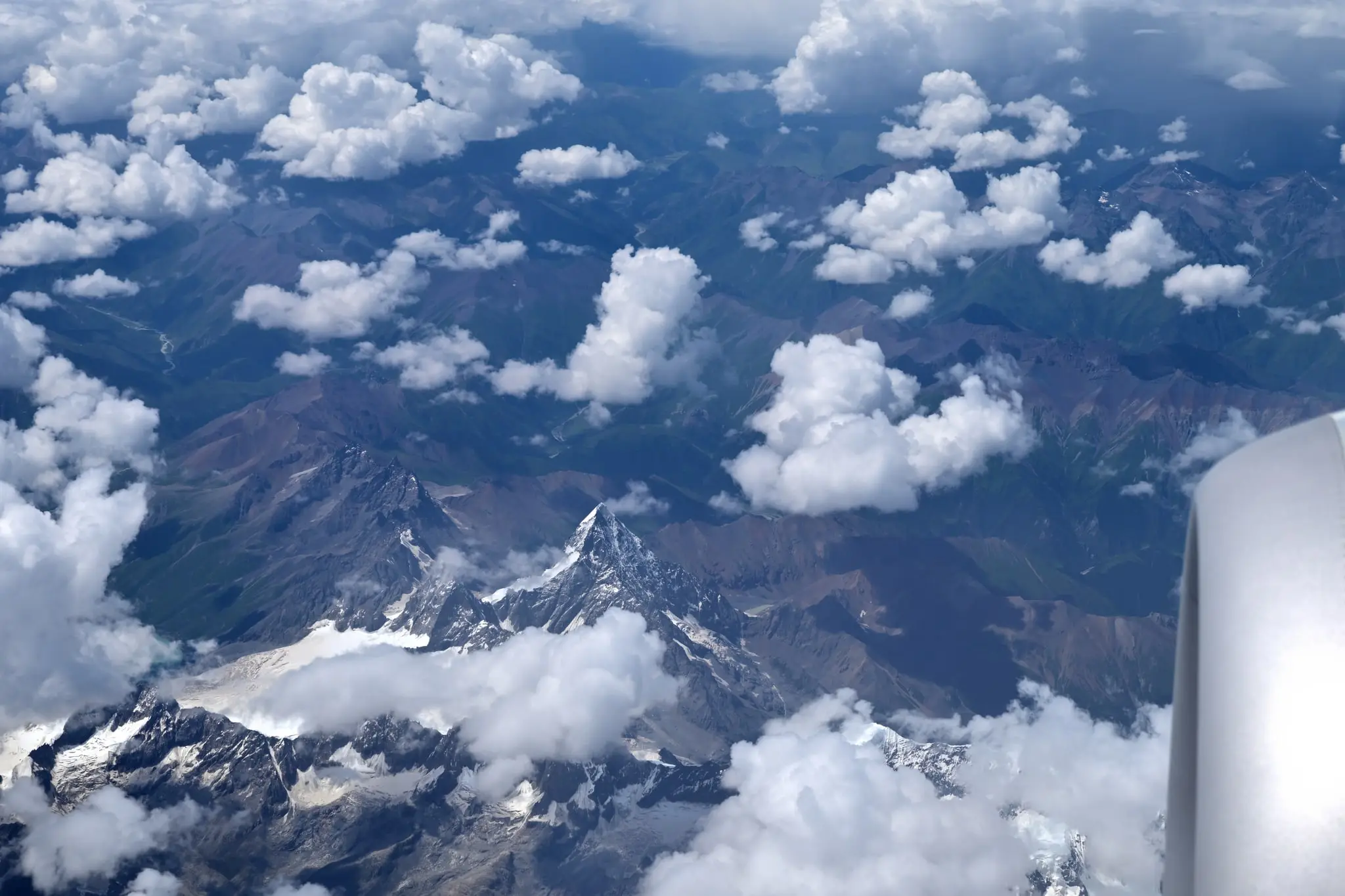
There’s always a first time for everything, and on July 14th of 2024, we landed at Lhasa Airport, which sits at an altitude of nearly 12,000 ft (3600 meters). While I had experienced thin air at summits before, landing at such a high altitude without acclimatization was a bit uncomfortable. We were warmly greeted with traditional white silk “kataks” (or hada, a silken ceremonial scarf) at the airport before proceeding to the Xing Ding Hotel. The next morning, we met our guide, Tenzing, who goes by Tenzing Lhasa to distinguish himself from other Tenzings at the tour agency. The name immediately reminded me of Tenzing Norgay, the famous mountaineer; it wasn’t long ago that I read “Our Ascent of Everest” by Edmund Hillary. I still remember his description of Tenzing’s triumphant smile at the summit. Tenzing Lhasa flashed a similar smile as I was the first to introduce myself. I had bought Tenzing with his name alone, and in the end, he proved to be the most dependable guide; without him, my wife would have dreaded descending from Dolma La Pass at 18,500 ft.
The next day, Drepung Monastery was our first destination, where we began immersing ourselves in Tibetan Buddhism.
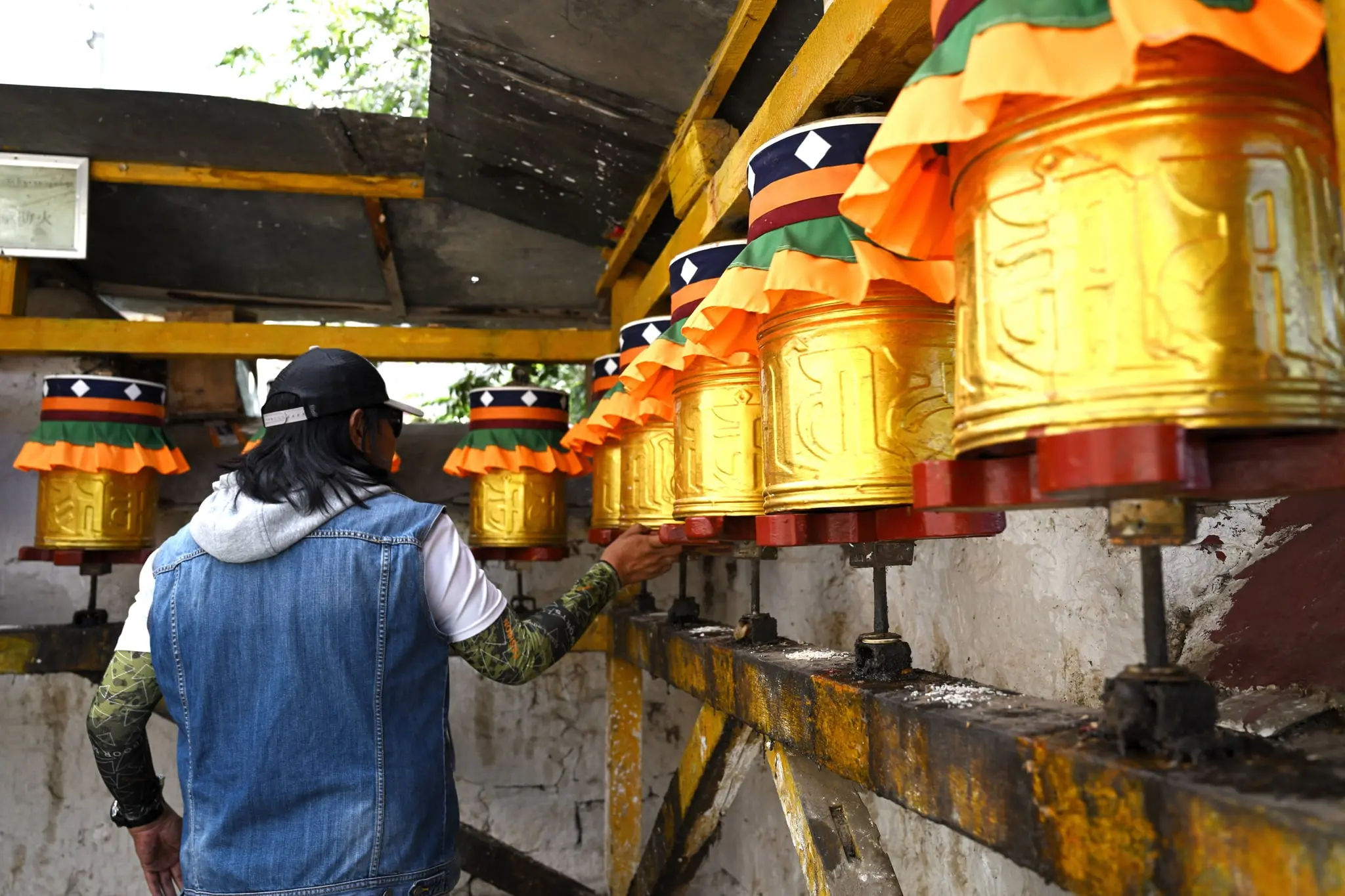
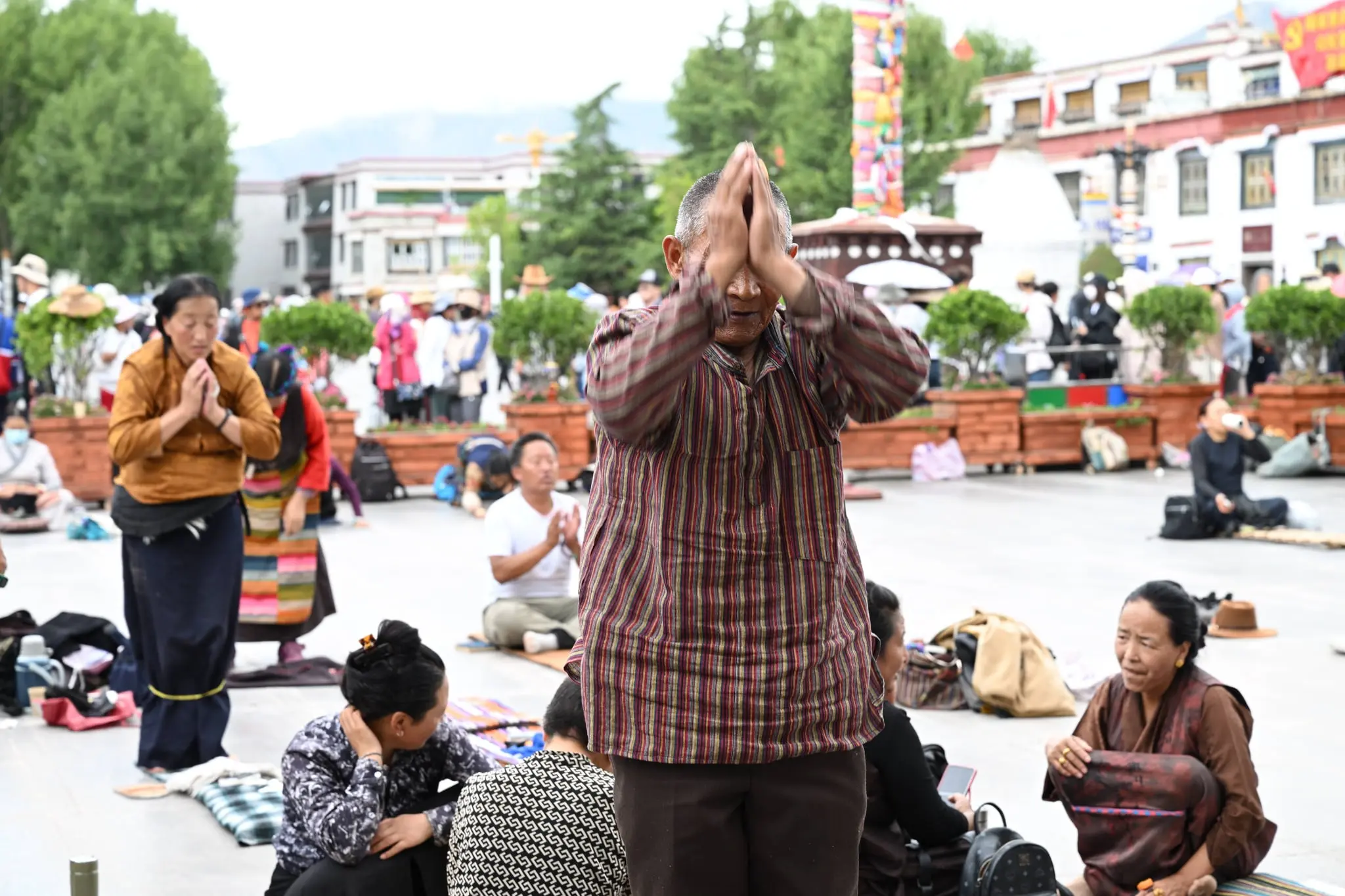
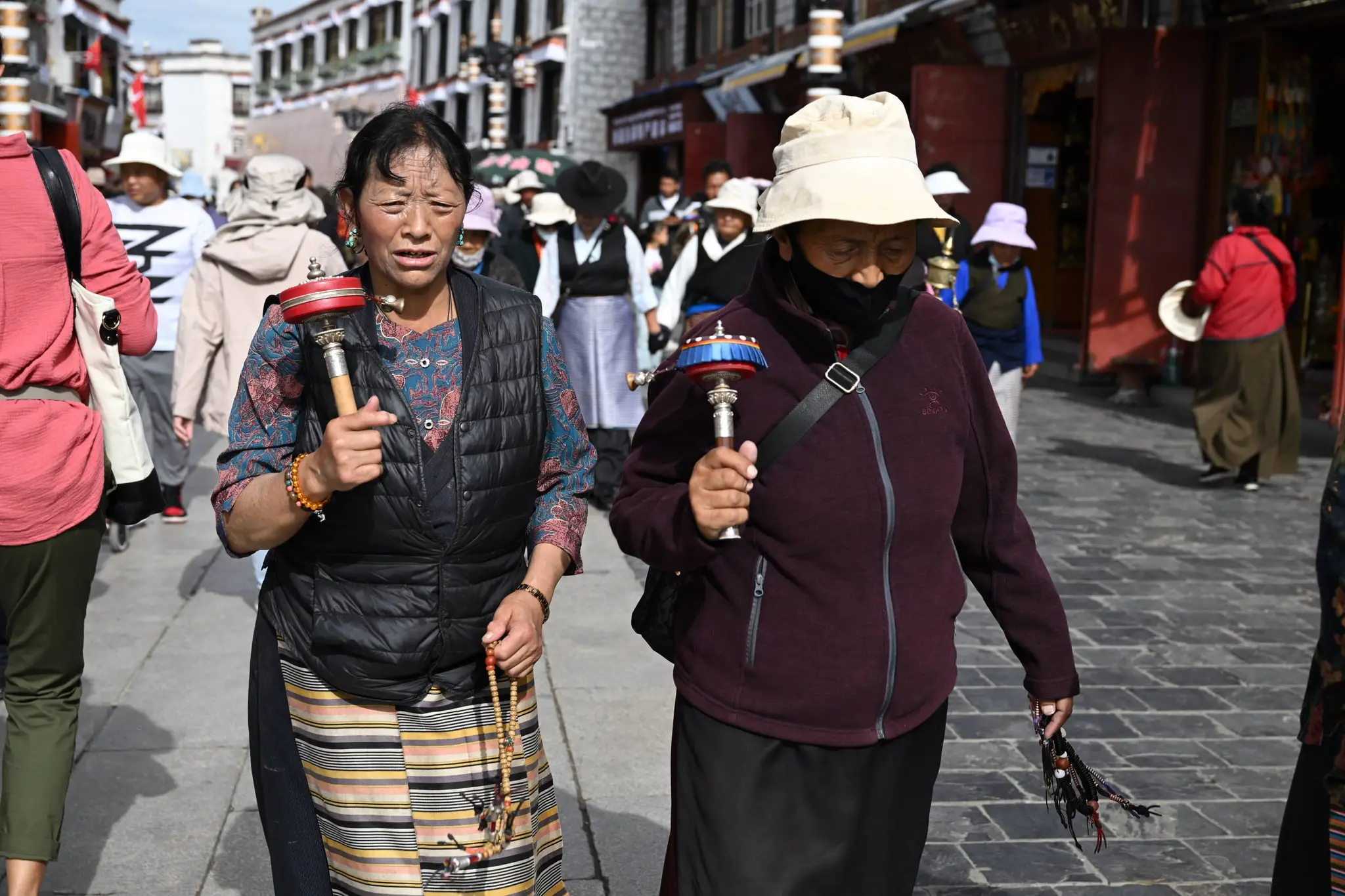
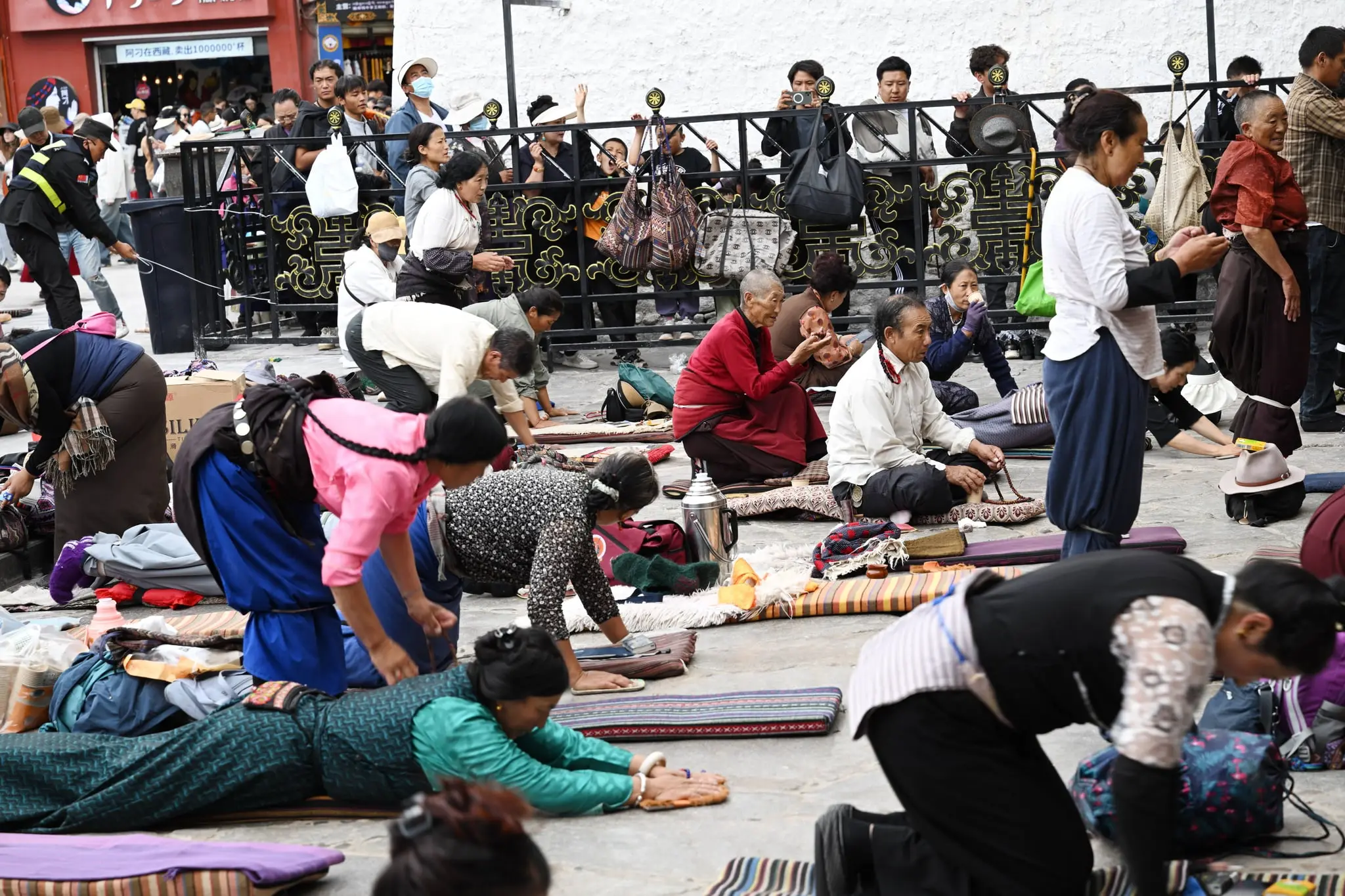
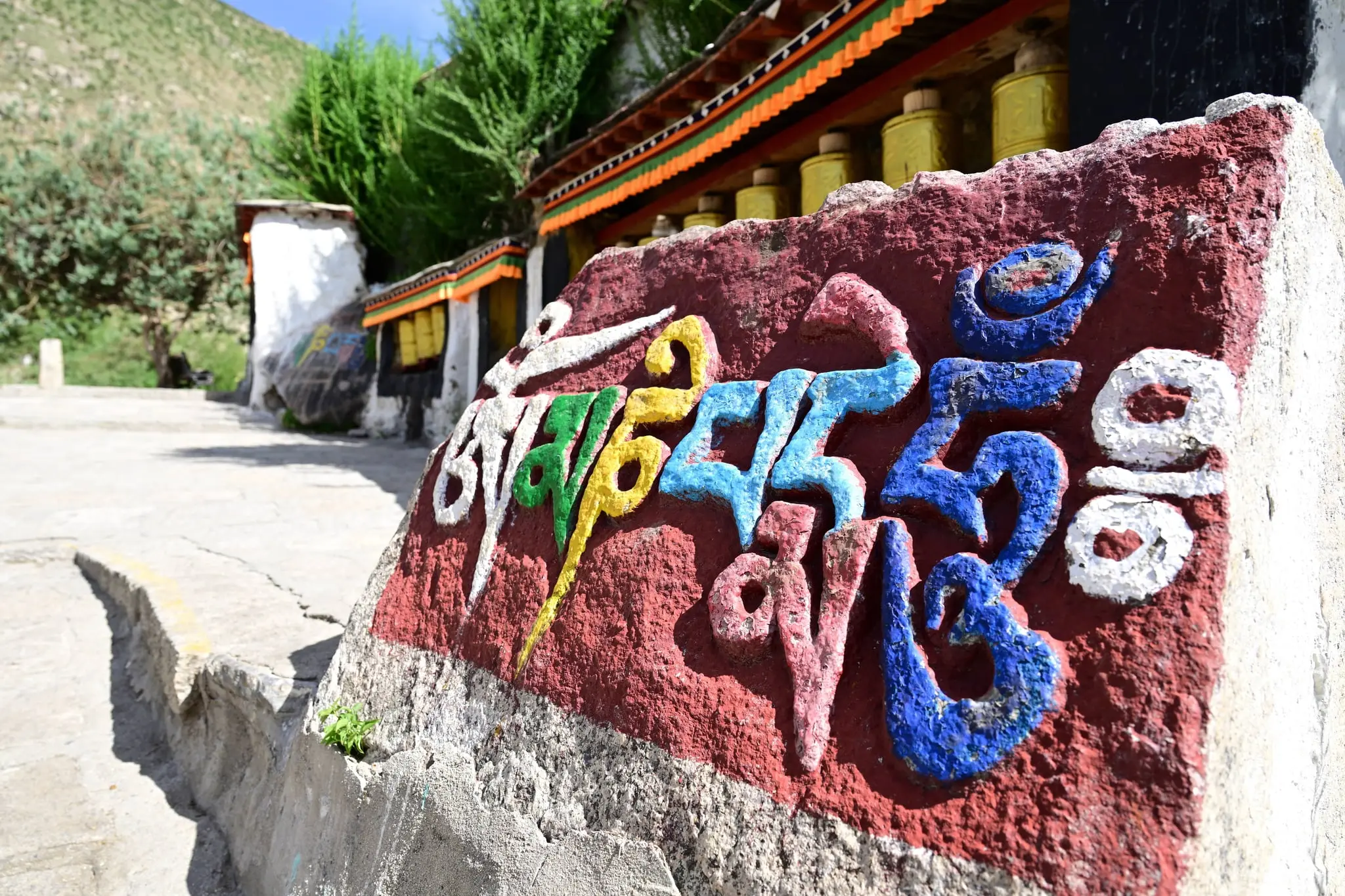
Among the many forms of Buddha, every Tibetan monastery depicts the three main forms: Avalokiteswara, manifested from the compassion of Sakyamuni; Manjushri, supreme wisdom personified; and Maitreya, regarded as the future Buddha. The great mantra “Om Mani Padme Hum” is engraved on stones everywhere, while prayer wheels rotate under ghee-lit lamps. Holy water, tinged yellow, sits in bronze vessels. The chanting resonates like a soothing melody. The monasteries of Tibet exude an enchanting atmosphere.
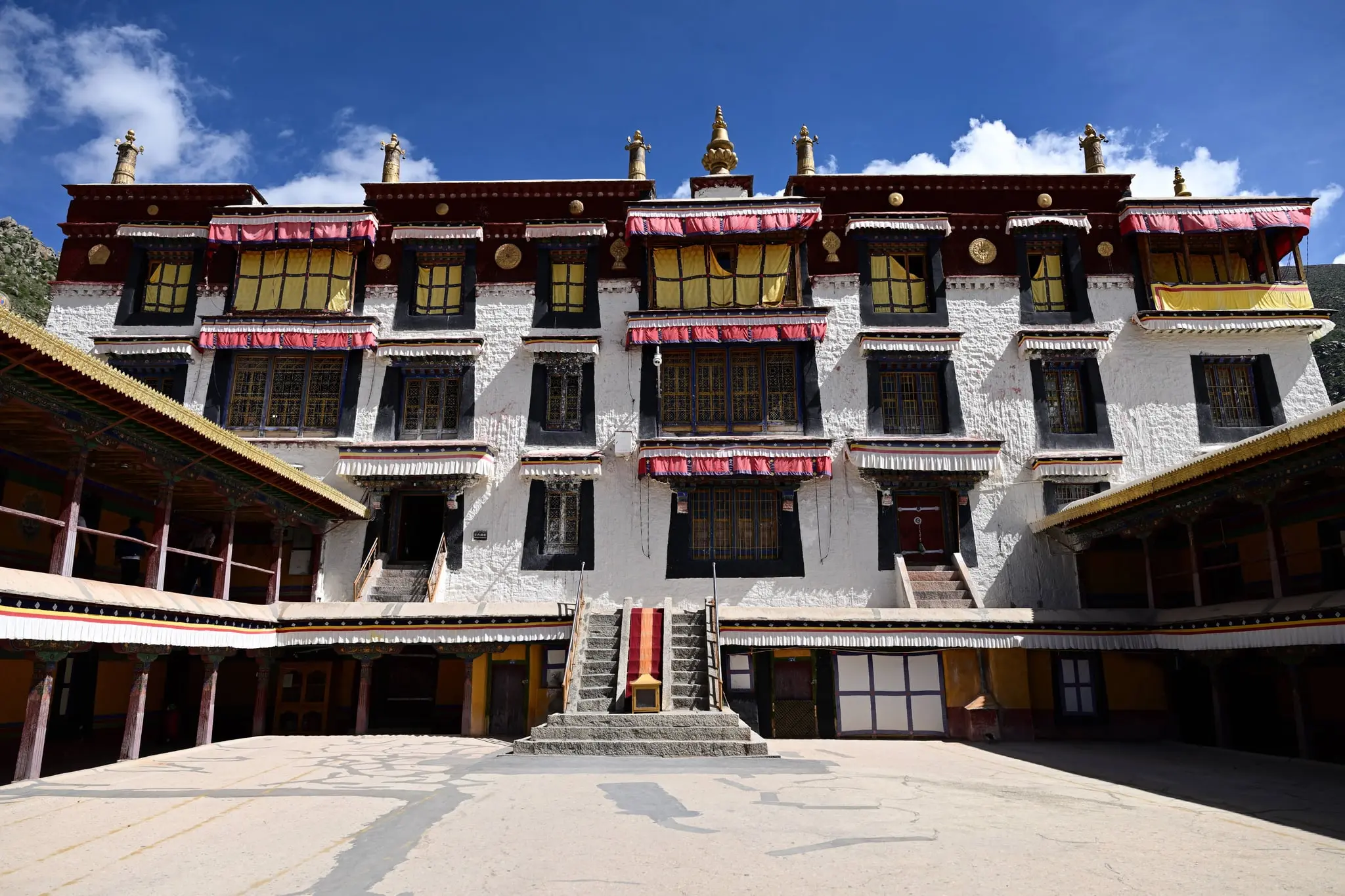
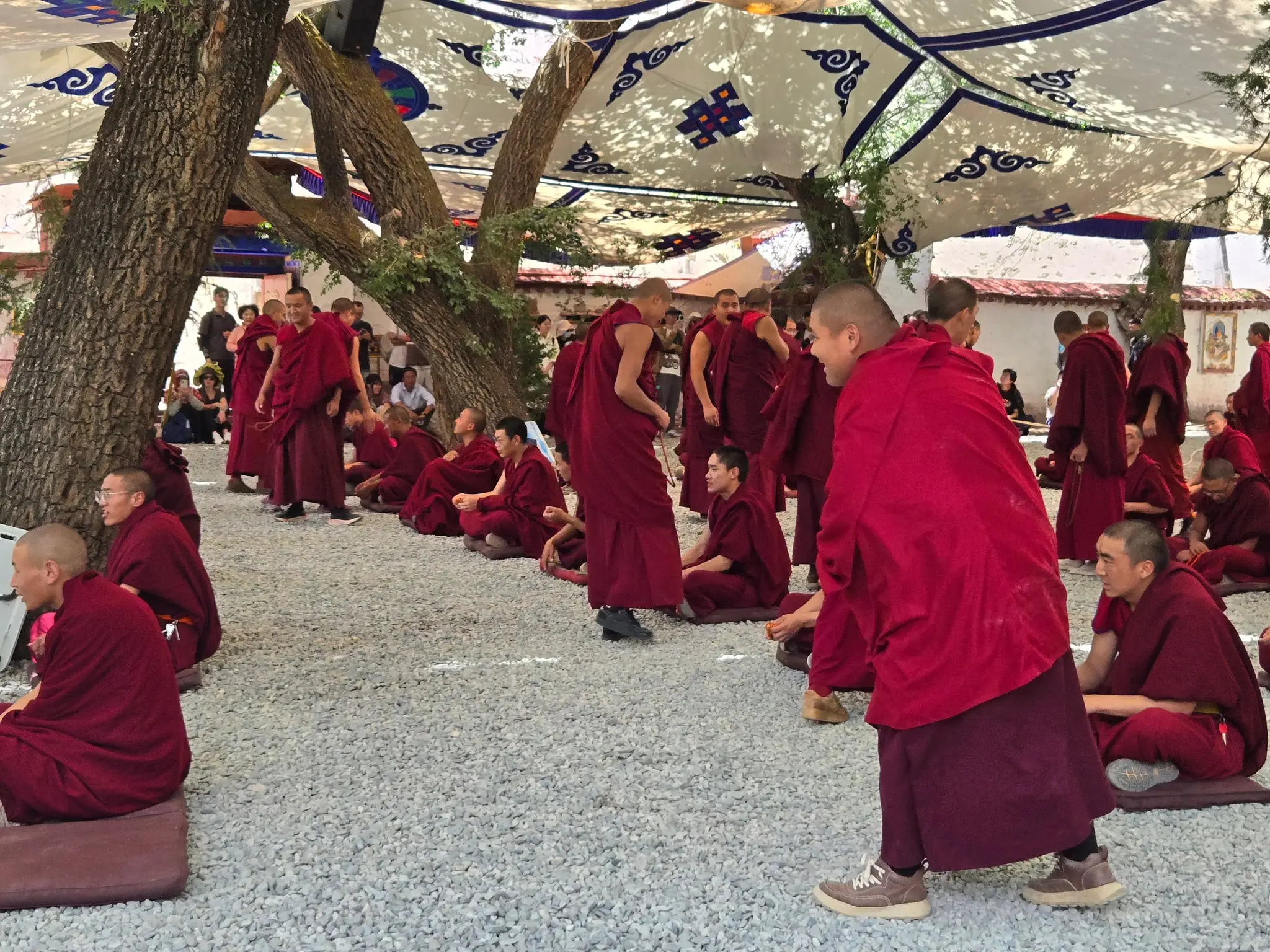
A girl’s look and smile at the Tsokchen temple outside the monastery made my day. We spent the afternoon at Sera Monastery, where the main attraction was the monk debate, with monks engaging in lively discussions on Buddhism. Watching them was a delightful experience!
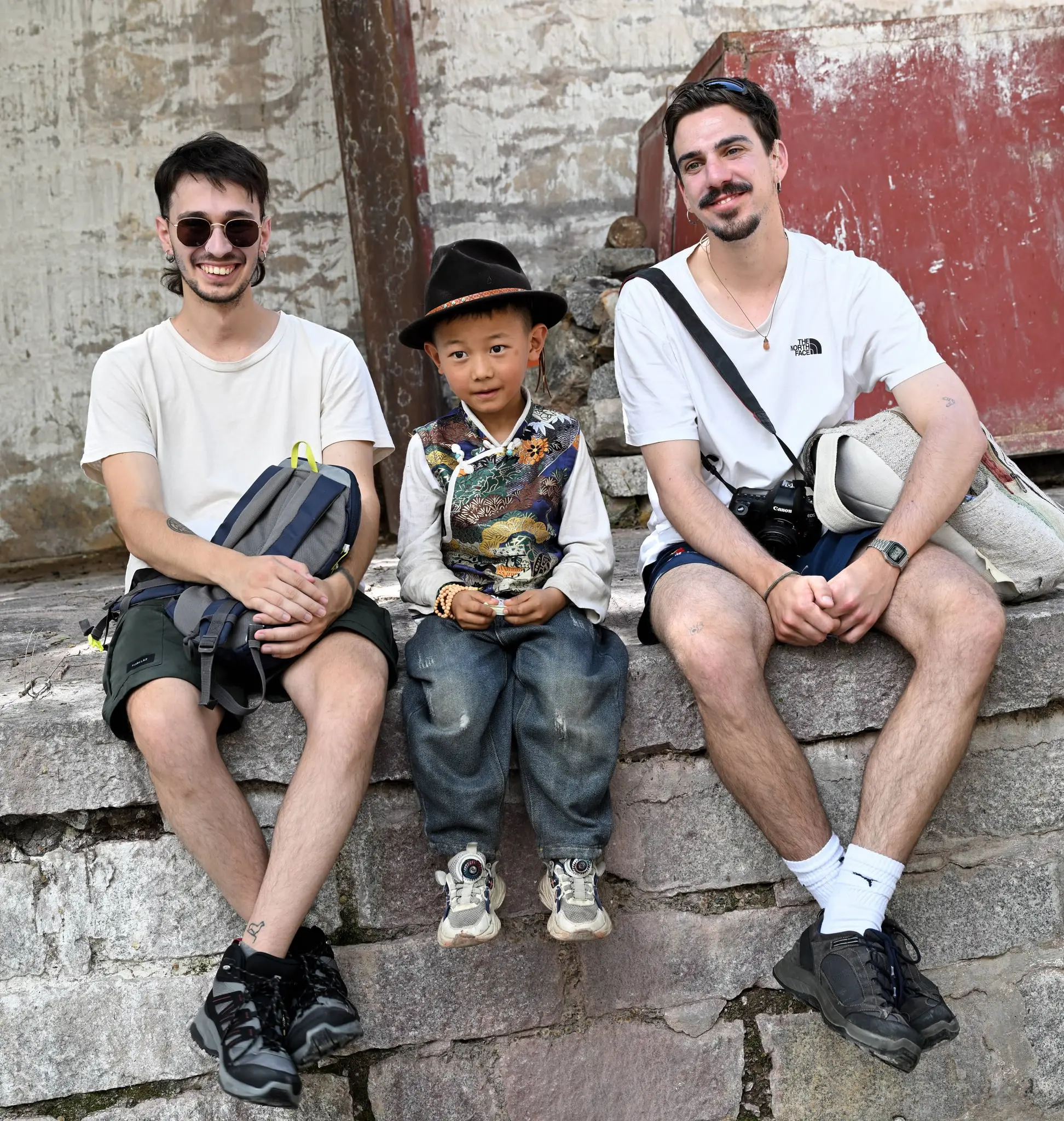
Outside the Monk Debate stage, I saw Fran and Rafa, visiting from Spain, sitting with a local boy – a truly special moment! I couldn’t resist capturing the image.
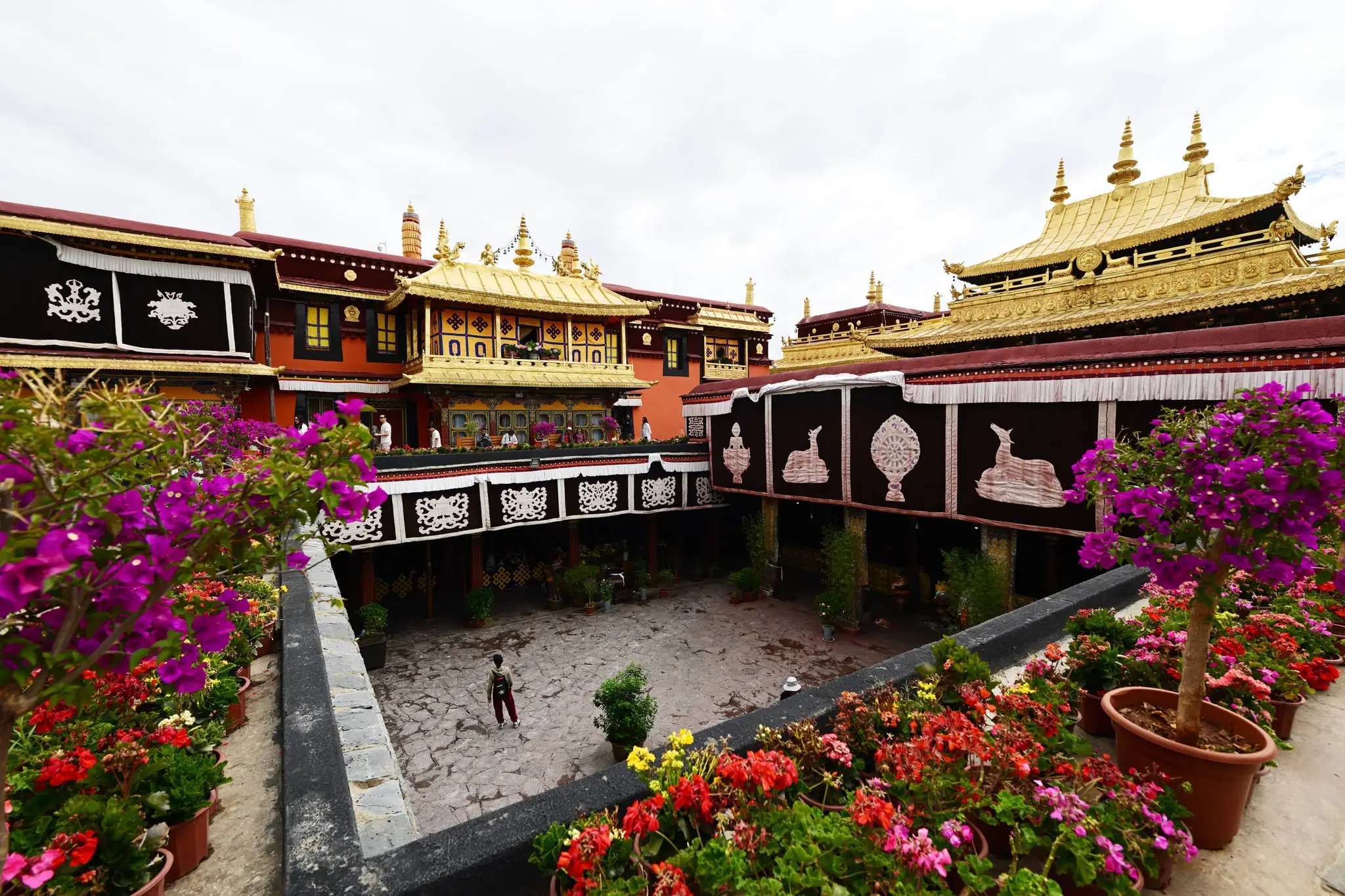
The following day took us to Lhasa’s iconic Jokhang Temple and Potala Palace. Our guide, Tenzing, knowledgeable in Tibetan Buddhism, shed light on Jokhang Temple’s profound importance as Tibet’s 7th-century spiritual heart. Inside the temple stands a stunning bronze Buddha statue, capturing him at twelve; photography is not permitted.
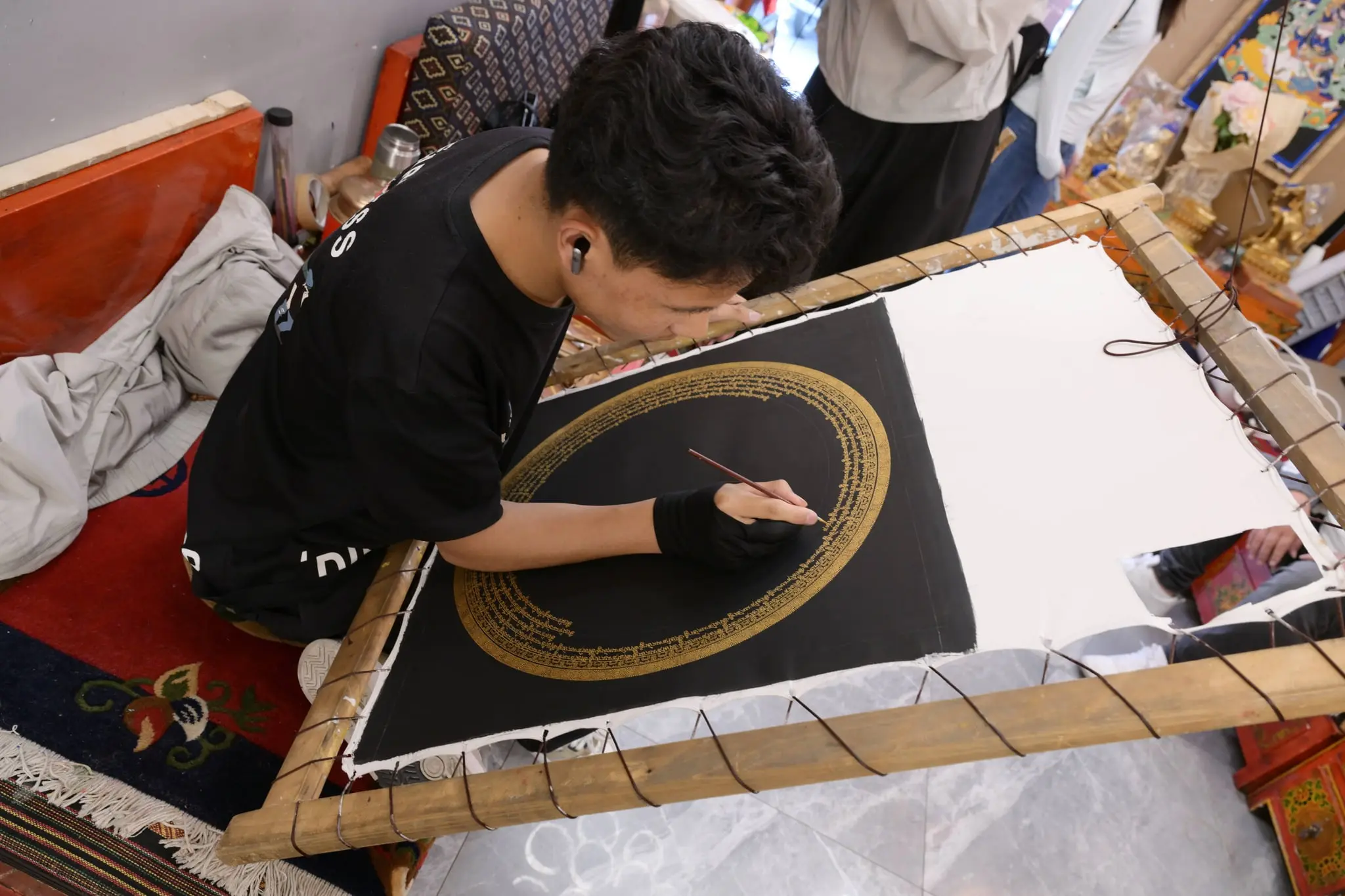
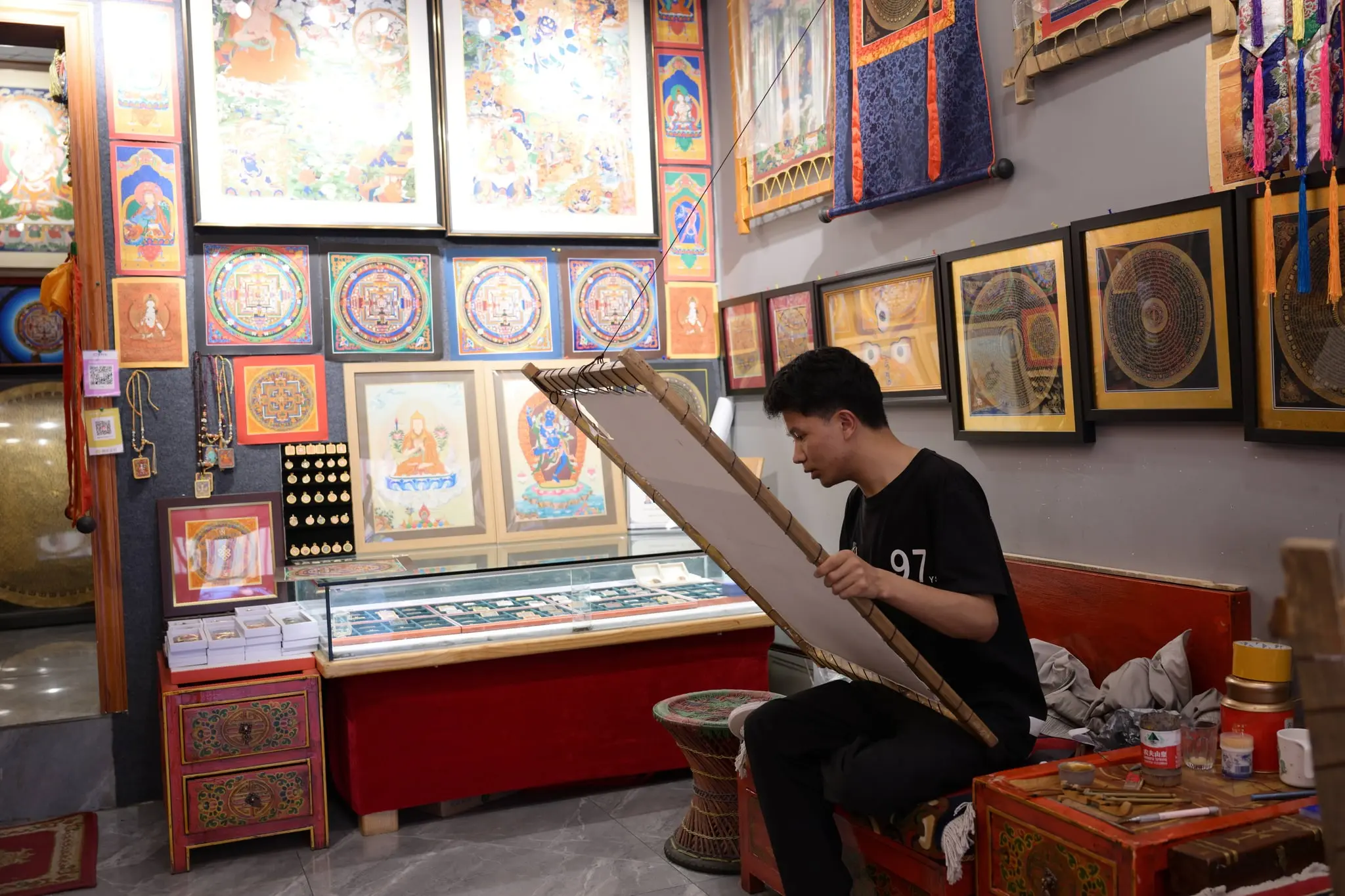
Thangka paintings, a revered Tibetan Buddhist art form, bring Buddhist deities, landscapes, and mandalas to life on cotton, silk, and other materials. Thangkas are sacred objects used to guide prayer, meditation, and impart Buddhist teachings. Our guide, Tenzing, shared that Tibetans seldom keep images of deceased ancestors and loved ones in their homes. In their place, Thangkas are displayed. Thangkas play a role in rituals conducted by monks to favorably influence a deceased person’s karma. Our exploration of Old Town, Lhasa, led us to Thangka shops.